Saturday, June 19, 2010

Food, culture and nutrition around the world

These activities are intended for ELLs in late elementary school. That is the reason why, even though the topics suggested for anaylisis and discussion belong in that level, the reading materials are of a lower level of difficulty. Students will have already been introduced to general ideas on food and nutrition.

Learning Center 1 (of 3): What children eat around the world. Reading


Illinois Learning Standards

1. A. Apply word analysis and vocabulary skills to comprehend selections.
1. B. Apply reading strategies to improve understanding and fluency.
13. B. Know and apply concepts that describe the interaction between science, technology and society.
17. A. Locate, describe and explain places, regions and features of the Earth.
17. C. Understand relationships between geographic factors and society.

Items Needed
Copies of Hollyer, B. (2003). Let’s eat. What children eat around the world. New York: Henry Holt in association with Oxfam. (IMC 394.1 H746L).
Paper, pens.

Activity


1. As a whole class, students will make predictions about the content of the book based on their reading of the texts and images in the contents page. The teacher will elicit the students’ predictions with general questions about their previous geographical and social knowledge of the countries and peoples involved.


2. In groups, students will read the book paying attention only to the regular days and not on the special days sections of the book. They will be asked to highlight all the regular activities that they children do during the day and to compare them with their own daily actions. The teacher and the students will make lists of those activities on the blackboard in order to revise the verbs connected with daily routines. A discussion of the ways in which the children’s lives compare and contrast will ensue.


3. Students will concentrate on food, then. With the assistance of the teacher, they will produce reader generated questions (RGQs) on food in the different cultures present in the text. Ideally, for this activity, the teacher will foster the questions he or she will already have in mind, but will not have them printed beforehand so as to give way to the questions students may have. Students will be asked to draw a graphic organizer with their questions and to look for the answers in the text. A final group summary of all the data the students will have gathered from the text would be advisable in order to highlight the differences or commonalities between the cultures under examination.


Learning Center 2 (of 3). The food pyramid.
Reading. Presenting.


Illinois Learning Standards


1. B. Apply reading strategies to improve understanding and fluency.
4. B. Speak effectively using language appropriate to the situation and audience.
15. A. Understand how different eco­nomic systems operate in the exchange, production, distribution and consumption of goods and services.
15. B. Understand that scarcity necessitates choices by consumers.
17. C. Understand relationships between geographic factors and society.


Items needed
Access to MyPyramid.gov.

Copies of Hollyer, B. (2003). Let’s eat. What children eat around the world. New York: Henry Holt in association with Oxfam. (IMC 394.1 H746L).
Colored construction paper, colored markers, crayons, pencils.


Activity


1. In groups, students will browse the sites for one of the food groups in the pyramid and make their own notes about them. They will prepare a short group presentation on the food group to be shared with the rest of the class.

2. In groups, students will choose one of the meals described in the the book they will have read (e. g. grilled beef, corn on the cob, puthu, madumbes and amasi) and determine how the food groups are represented in it. They will be able to use the food galleries for each of the groups in MyPyramid.gov for visual help. They will also have group discussions about how healthy the meal is in view of what is recommended by American government. Finally, they will make a poster on the meal they have worked on and present it to the rest of the class.

3. Once all the posters are displayed and presented, they will discuss as a class about the different stuff used to make up for the otherwise similar food groups around the world. They will also make connections about the availability of certain items depening on the geopgraphical region of the world in which the person lives. Comparison and contrast with their own geographical and social situation will be fostered.

Learning Center 3 (of 3). Jalapeno Bagels.
Reading. Presenting. Writing.


Illinois State Standards

1. A. Apply word analysis and vocabulary skills to comprehend selections.

1. B. Apply reading strategies to improve understanding and fluency.

1.C. Comprehend a broad range of reading materials.

4. B. Speak effectively using language appropriate to the situation and audience.

5. A. Locate, organize, and use infor­ma­tion from various sources to answer questions, solve problems and communicate ideas.

5. C. Apply acquired information, concepts and ideas to communicate in a variety of formats.

Items needed

Copies of Wing, N. (1996). Jalapeno Bagels. New York: Atheneum Books for Young Readers. (IMC EW769j)
Paper, pens.

Activity

1. As a whole class, students will make predictions on the content of the book based on its title and cover. The teacher will jot down all their suggestions on the blackboard so as to come back to them later, once they book will have been read. Then, the teacher will read the first passage of the book aloud (p. 3) and will ask the students to refine their guesses. Their new ideas will also be written down on the blackboard. Ideally, the teacher will guide them to the idea that the may problem in the book lies in the statement “My teacher told us to bring something from our culture.” On the basis of the material on the blackboard, the students will be asked to produce reader generated questions (RGQs) which, this time, will not be induced by the teacher.


2. Looking for answers to the questions they will have produced, students will read pp. 4 to 16 of the book in pairs. After that, they will be asked to make groups of four and discuss their answers. A class discussion will ensue in which they will retell the events in the story and check out their guesses. The teacher will explain why certain guesses where more appropriate than others and why some might not be plausible at all. Ideas about the structure of the story will be elicited. Based on that structure, the teacher will make a list on the blackboard containing all the bread items mentioned in the text (i. e. pan dulce, empanadas de calabaza, chango bars, bagels, challah, sesame-seed bagels, and jalapeno bagels). Students will be asked to describe each one of these items briefly. They will be advised to refer for help to the glossary on p. 21. Finally, they will be asked to predict the end of the story and their guesses will be jot down on the blackboard.


3. Students will be asked to form pairs different form the ones they have formed at the beginning of the lesson and they will read the end of the story. By the time they have finished, the teacher will have written on the blackboard the final passage of the book “Why Jalapeno bagels? -asked Papa. Because they are a mixture of both of you. Just like me!” He or she will ask the students to explain the meaning and moral of the story tracing back to the content of the story, i. e. the different bread items belonging in the Mexican and Yiddish cultures. As a way of connecting this learning centre to the previous ones, the teacher may ask the students questions about the food groups the items mentioned in the story belonged in and about their nutrition and health facts (Learning Center 2) or to spot the cultures where the parents in the story come from in a world map and make connections with the food produced in those regions (Learning Center 1).
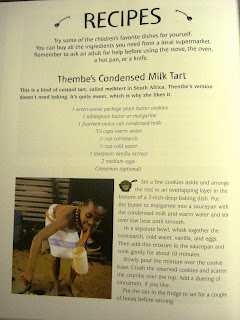
4. Something from your culture. As a final step, the teacher will ask the students to brainstorm ideas to describe food items from which they consider to be “from their culture” and they will produce an outline of a writing/photograph/recipe/story project to be presented on the following class. That class will probably start with a vocabulary activity in which students will have to match the names of the different dishes learnt in this lesson to their corresponding descriptions. Ideas about the cultural globalization of food may be introduced on a subsequent class as well.


Friday, June 18, 2010

Fruits

Activity 1 (of 3)- Food Pyramid

IL State Standard:
3.C. 2a Write for a variety of purposes and for specified audiences in a variety of forms including narrative and persuasive writing.
Materials Needed:
My Food Pyramid by DK publishing, NutrFruit Heroes (IMC 3-D HEAL 250, 251), and real fruit
examples
(including, but not limited to kiwi, mango, pear, blueberry, cherry)

Instruction:

Begin the activity by handing out a worksheet with various pictures of fruits where the students have to identify as many as they can. Have them turn it over when they are done. When students are finished then read pages 4-5 and 10-11 in the book
My Food Pyramid by DK publishing. Have the students turn their papers back over again and then introduce the various fruits by using the NutraFruit Heroes to help. When this is complete discuss why they were able to recognize some fruits and why they did not recognize others.


Activity 2 ( of 3)- Nutra Fruit Heroes - Nutrients

IL State Standards:
5.A.2b Organize and integrate information from a variety of sources (e.g., books, interviews, library reference materials, web- sites, CD/ROMs).

5.C.2b Prepare and deliver oral presentations based on inquiry or research.

4.B.2a Present oral reports to an audience using correct language and nonverbal expressions for the intended purpose and message within a suggested organizational format.

Materials needed:
NutraFruit Heroes (IMC 3-D HEAL 250, 251), computer access or books that will provide the information students need to look for.

Instruction:
Divide students into four groups. Give each group one of the four NutraFruit Heroes. Students will have to research the nutrients that are found in each fruit and why our bodies need those nutrients. They will then need to create a presentation for the rest of the class using the NutraFruit hero and giving the information they found. They must include in their presentation the nutrients found in the fruit, why our bodies need the nutrients, and what might happen or could happen if our bodies do not get these nutrients.

Activity 3 ( of 3)- Fruit Salad

IL State Standards:
7.B.2a Determine and communicate possible methods for estimating a given measure, selecting proper units in both customary and metric units.
Materials needed:
Oliver's Fruit Salad
by Vivian French, fresh pineapple, frozen raspberries, vanilla yogurt, bananas, chopped dates, and toasted almonds, also will need measuring utensils.

Instruction: Begin by discussing some of the various fruits or dishes that have fruits in them students have eaten before. Also discuss why or why not they eat many different kinds of fruits. Then read the book Oliver's Fruit Salad by Vivian French. After reading the book, discuss why they think Oliver wanted his mother to buy all of the different fruits, but would not eat them after she bought them. Have students get into groups of 4 after the discussion and have them make the Fruity Breakfast Parfait. The recipe will make 4- 6 oz. servings, so multiply ingredients as needed. The recipe calls for 2 cups of chopped fresh pineapple, 1 cup frozen raspberries thawed, 1 cups lowfat yogurt, 1 firm medium banana peeled and sliced, 1/3 cup of chopped dates, and 1/4 cup of sliced toasted almonds. In 6 oz. cups layer the pineapple, raspberries, yogurt, banana, and dates. Then sprinkle the top with almonds. Students can then sample their Fruity Breakfast Parfait.


Thursday, June 17, 2010

Exploring Food with Anansi


Prior to these center activities, the teacher will have already read the book, Anansi and the Moss Covered Rock, retold by Eric A. Kimmel, to the students using Story Aid 260 (IMC, 3D Story Aid 260). The teacher will have also introduced the foods using real props.

Activity 1 (of 3): Science Center - Close Examination


Illinois Early Learning Standards

11.B.ECa: Use scientific tools such as thermometers, balance scales and magnifying glasses for investigation.
12.C.EC: Make comparisons among objects that have been observed.


Items Needed

Anansi and the Moss Covered Rock, digital microscope, (digital cameras or magnifying glasses could be used in the absence of digital microscope), computer, foods from book (watermelon, coconut, pineapple, bananas, yams, cantelope, and apricot), T-Chart made on large chart paper, and markers


Activity
  1. Students will use the digital microscope to examine the skins of the foods in Anansi and the Moss Covered Rock. Teachers should consider asking the following questions to prompt both lower and higher order thinking as needed during this part of the activity: How could you hold the digital microscope to get an even better picture of what you are examining? What do you see? How would you describe that?
  2. Students will create a book using the pictures they take with the digital microscope. Teachers should consider asking the following questions to prompt both lower and higher order thinking as needed during this part of the activity: What is that? What else could you imagine that it might be? What words would you use to describe what you see?
  3. During closing circle, students will be encouraged to compare and contrast what they see in the pictures using a t chart of same and different. Teachers should consider asking the following questions to prompt both lower and higher order thinking as needed during this part of the activity: How are these items alike? How are they different? As more prompting is needed, the teacher may ask more specific questions, such as: Which ones are smooth? Which ones are bumpy? How would you describe the one in this picture? How is it different from the one in this picture? The teacher may also want to have the real objects present for those students who need to feel the objects again rather than just see the picture.

Activity 2 (of 3): Math Center - Weighing Food


Illinois Early Learning Standards

5.C.EC: Communicate information with others.
7.B.EC: Show understanding of and use comparative words.
10.A.ECa: Represent data using concrete objects, pictures, and graphs.
10.A.ECb: Gather data about themselves and their surroundings.
11.A.ECb: Collect describe and record information.
11.B.ECa: Use scientific tools such as thermometers, balance scales and magnifying glasses for investigation.
12.C.EC: Make comparisons among objects that have been observed.


Items Needed

Anansi and the Moss Covered Rock, foods from the book (watermelon, coconut, pineapple, banana, yam, cantelope, and apricot), balance (CMC, 3-D, SCIE, 480), chart paper, and markers


Activity
  1. During circle time, students will predict which of the foods they think will weight the least and which of the foods they think will weigh the most. The teacher will record their predictions.
  2. In the math center, students will use a balance to determine which of the foods weighs the least and which of the foods weighs the most.
  3. Students will place the items in order from lightest to heaviest.
  4. During closing circle time, the teacher will lead in a discussion about the activity and lead students to check their predictions.

Activity 3 (of 3): Cooking Center - Making Fruit Salad


Illinois Early Learning Standard

22.A.EC Participate in simple practices that promote healthy living and prevent illness.


Items Needed

Plastic or butter knives for each child, cutting boards, recipe for fruit salad, ingredients for fruit salad, measuring spoons, large bowl, mixing spoon


Activity
  1. In the cooking center, students will prepare fruit salad with the assistance of an adult. The teacher may choose to use the following questions to promote higher level thinking and conversation throughout the activity: What does the recipe say we will include in our fruit salad? This fruit is big. What should we do to it to prepare it for our fruit salad? How many pieces have you cut your banana into? Have you ever made fruit salad? How does this smell? Does it remind you of anything? Do you think you will want to eat it? If you were making this at home, what else might you put in the fruit salad?
  2. As an optional follow up activity, students may move to the computer and design their own fruit salad on Mia Mango's Recipe Inventor. Recipes may be printed and sent home. The teacher may also use the printed recipes to chart and facilitate a discussion about which fruits were chosen the most and the least.


Tuesday, February 23, 2010

Object Box: National Symbols

Object Box: National Symbols
By: Michelle Miller and Jessa Poninski

Object Box 1 (of 5): American Flag (Interactive Website)

NCSS Thematic Strand: Time, Continuity, and Change

IL Social Science Standard:
STATE GOAL 16: Understand events, trends, individuals and movements shaping the history of Illinois, the United States and other nations.
16.A.2c Ask questions and seek answers by collecting and analyzing data from historic documents, images and other literary and non-literary sources.

Activity: (1)The students will interact with the flag to discover new and interesting facts about the original “Star Spangled Banner.” (2)The students will answer the questions provided throughout the website to collect stars that will complete the flag. (3) The students will create a five pointed star following in the footsteps of Betsy Ross. This should only take one cut on one piece of paper if folded correctly.

Content of Box: Website-http://americanhistory.si.edu/starspangledbanner/interactive-flag.aspx

Resources: Instructions and background for folded, five pointed star-//www.ushistory.org/betsy/flagstar.html,

Labels: Flag, Star, Symbol


Object Box 2 (of 5): Liberty Bell (Children’ Book Saving the Liberty Bell)

NCSS Thematic Strand: Individual Development and Identity

IL Social Science Standard:
STATE GOAL 18: Understand social systems, with an emphasis on the United States.
18.B. Understand the roles and interactions of individuals and groups in society.
18.B.2a Describe interactions of individuals, groups and institutions in situations drawn from the local community (e.g., local response to state and national reforms).

Activity: (1) The students will be read, Saving the Liberty Bell. (2) Students will be broken into to groups and assigned a historical figure from the book. After subsequent time for research, each group will expected to present a two-three minute oral presentation of their character. The presentation should include the effect their actions had on the war, the church, or society in general. (3) The students will be given several items in order to create a replica of the liberty bell.

Contents of Box: Saving the Liberty Bell, Morris Library-IMC 974.8

Resources: Directions on how to make a Liberty Bell replica-http://www.michaels.com/art/online/projectsheet?pid=c00034

Labels: Bell, Liberty, Freedom, Symbols


Object Box 3 (of 5): Map of Landmarks

Thematic Strands: People, Places, and Environments

IL Social Science Standard:
STATE GOAL 17: Understand world geography and the effects of geography on society, with an emphasis on the United States.
17.A. Locate, describe and explain places, regions and features on the Earth.
17.A.2b Use maps and other geographic representations and instruments to gather information about people, places and environments.

Activity: Beginning at their home, students will plan a trip that takes them to at least four different U.S. Landmarks. Once the students have decided where they will visit, they will take a simulated journey using the internet. They should document things along the way such as, changes in environment, culture, and the length of the trip. At each stop (landmark) the student should provide a description of what they see. This should include whether the landmark is man-made or natural. The end of the journey should bring them back home where they will calculate the total miles driven.

Contents of Box: Map of U.S. Landmarks

Resources: Provided map- http://www.mrnussbaum.com/landmarks.htm,
Internet access for students

Labels: Map, Landmarks, Geography, United States


Object Box 4 (of 5): Mount Rushmore Puzzle


Thematic Strands: Landmarks, Historical figures

IL Social Science Standards:
STATE GOAL 16: Understand events, trends, individuals and movements shaping the history of Illinois, the United States and other nations.
D. Understand Illinois, United States and world social history.
16.D.2c (US) Describe the influence of key individuals and groups

Activity: Students will complete the 100 piece puzzle to create a picture of Mount Rushmore. Once complete and using the internet as a resource, students will identify the faces that make up this historic landmark. They will write a short paragraph about each figure and why they are famous and the accomplishments/contributions they made throughout history.

Content of Box: Mount Rushmore Puzzle, Morris Library IMC 3-D SOCZ 370

Resources: Internet access for students

Labels: Mount Rushmore, Historical Figures, Landmarks


Object Box 5 (of 5): National Symbols


Thematic Strands: America, Freedom, Liberty

IL Social Science Standards:
STATE GOAL 16: Understand events, trends, individuals and movements shaping the history of Illinois, the United States and other nations.
A. Apply the skills of historical analysis and interpretation.
16.A.2c Ask questions and seek answers by collecting and analyzing data from historic documents, images and other literary and non-literary sources.

Activity: After viewing these posters and discussing in class what each of these pictures are, students will be asked to write an essay about one of these pictures. Students will be asked to pick the poster that they think best represents America. They will have to explain why they choose that particular picture and why they believe it represents America and why. Once the essays are completed, they will share their writing with the class.

Content of Box: 5 posters of National Symbols, Morris Library Resource Room US History file cabinet

Resources: Posters from Morris Library

Labels: Mount Rushmore, American Flag, Independence Hall, The White House, Statue of Liberty, America

Monday, February 22, 2010

Object Box: The Middle Ages

by Derek Cook

OBJECT BOX 1: MEDIEVAL LIFE


NCSS Thematic Strand: I - Culture

State Goal: IL.16: Understand events, trends, individuals and movements shaping the history of Illinois, the United States and other nations.
>16.D.1(W): Identify how customs and traditions from around the world influence the local community.
>16.D.2(W): Describe the various roles of men, women and children in the family, at work, and in the community in various time periods and places (e.g., ancient Rome, Medieval Europe, ancient China, Sub-Saharan Africa).

Activity: After the teacher reads passages from the book Life in the Middle Ages: The Countryside, put the students in groups of three or four, assign them each a roll to play as part of a peasant family, and have them discuss within the group what it would be like to be part of that family in the Middle Ages. After adequate time has been given for the discussion, have each group share with the rest of the class their opinions on what life would have been like for a peasant family during the middle ages. Make suggestions and/or guided questions to cover any important information that students might have missed.

Contents of Box: Life on a Manner poster, Life in the Middle Ages: The Countryside by Hinds, Kathryn, Medieval History time chart poster, The Medieval Town poster

Resources: Hinds, Kathryn. (2001). Life in the Middle Ages: The Countryside. New York: Benchmark Books
SIUC Morris Library - 3rd floor IMC Poster Collection - HIS 249
SIUC Morris Library - 3rd floor IMC Poster Collection - HIS 130
SIUC Morris Library - 3rd floor IMC Poster Collection - HIS 131

--------------------------------------------------------------------------------

OBJECT BOX 2: THE CHURCH


NCSS Thematic Strand: V – Individuals, Groups, and Institutions

State Goal: IL.18: Understand social systems, with an emphasis on the United States.
>18.B.2a: Describe interactions of individuals, groups and institutions in situations drawn from the local community (e.g., local response to state and national reforms).
>18.B.2b: Describe the ways in which institutions meet the needs of society.

Activity: The teacher will read passages from Art and Civilization: Medieval Times and then lead a discussion as to why the church was so important in the lives of individuals during the Middle Ages. The students will be reminded of the remoteness of manors and now interaction with other communities in such cases was not common, thus propagating generational isolation that required a system of order supplied by the church. Then the students will be placed into small groups to discuss and list any institutions in their community that have a heavy influence on their lives. Each group will share their list with the rest of the class. After the teacher guides a short discussion about the lists, each student will be asked to write a short paragraph about whether or not they believe that institutions such as those discussed from the lists should in fact be an influence on the community. The students should also give examples of positive and/or negative effects of the institution.

Contents of Box: The Medieval Church poster, Art and Civilization: Medieval Times by Bardi, M., Di Pasquale, G.

Resources: Bardi, M., Di Pasquale, G. (2002). Art and Civilization: Medieval Times. New York: Peter Bedrick Books/McGraw-Hill
SIUC Morris Library - 3rd floor IMC Poster Collection - HIS 132


---------------------------------------------------------------------------------------------

OBJECT BOX 3: NOBILITY


NCSS Thematic Strand: VI – Power, Authority, and Governance

State Goal: IL.16: Understand events, trends, individuals and movements shaping the history of Illinois, the United States and other nations.
>IL.16.B.3c(W): Identify causes and effects of European feudalism and the emergence of nation states between 500 CE and 1500 CE.
State Goal: IL.18: Understand social systems, with an emphasis on the United States.
>18.B.2a: Describe interactions of individuals, groups and institutions in situations drawn from the local community (e.g., local response to state and national reforms).

Activity: Volunteers will be asked to read passages from Good Masters! Sweet Ladies! Voices from a Medieval Village. The teacher will then ask the students what was different about being of noble birth as compared to being a common peasant. The teacher will then lead a discussion about the obligation and responsibility of governance over a population and then the threats from abroad during the Middle Ages. After the discussion the teacher will group the class into four teams to play a basic game of the King Maker board-game. As homework, each student will be asked to write a few paragraphs trying to persuade their audience as to whether it was more advantageous to be a noble or peasant during the Middle Ages.

Contents of Box: King Maker board-game, Good Masters! Sweet Ladies! Voices from a Medieval Village by Schlitz, Laura Amy

Resources: Schlitz, Laura Amy. (2007). Good Masters! Sweet Ladies! Voices from a Medieval Villiage. Cambridge: Candlewick Press
SIUC Morris Library - 3rd floor IMC 3-D GAMES 271

----------------------------------------------------------------------------------------------


OBJECT BOX 4: CASTLES


NCSS Thematic Strand: VIII – Science, Technology, and Society

State Goal: IL.16: Understand events, trends, individuals and movements shaping the history of Illinois, the United States and other nations.
>16.E.5a(W): Analyze how technological and scientific developments have affected human productivity, human comfort and the environment.

Activity: In groups of three or four, the students will be given ample time to explore the interactive PC game. After all of the students have been acquainted with the game, the teacher will lead them in a discussion as to the different features of a castle and their respective functions. The student will be asked to consider the advancements or building techniques of the time period, yet the limitations of such technology as compared to modern day. The students will then be put in pairs in which they will design and draw a castle that must stay true to the building technologies discussed from the Middle Ages. The students will also be asked to label special features on their castles and what function they serve. Each pair of students will share their drawing with the rest of the class, after which the drawings will be displayed on a bulletin board.

Contents of Box: Castle Explorer game (software)

Resources: SIUC Morris Library - 3rd floor IMC - IMC00198 271 (enquire at help desk)

-----------------------------------------------------------------------------------------------

OBJECT BOX 5: KNIGHTS


NCSS Thematic Strand: X – Civic Ideals and Practices

State Goal: IL.18: Understand social systems, with an emphasis on the United States.
>18.B.2a: Describe interactions of individuals, groups and institutions in situations drawn from the local community (e.g., local response to state and national reforms).

Activity: After reading the book Knights the teacher will lead a class discussion about what they learned from it and the other visual aides. Then the teacher will have the students participate in a mock jousting tournament. Two students will face each other at a sizeable distance apart so that they will be able to approach each other at a decent pace. Have each student tape an inflated balloon to his/her upper arm, just below the shoulder. Using Styrofoam swimming pool noodles have students joust, trying to knock off each other’s balloon. Set standard for winning a match, and keep track of students in a tournament bracket. Foil paper can be worn for fun. After the game is over, the teacher will ask the students to consider what a knight meant to a community during the Middle Ages and what his service to the Lord required of him. The teacher will discuss how matters of loyalty trumped personal satisfaction.

Contents of Box: Knights by Steele, Philip, Knight Puppet, Giant Knight Puzzle, Knights and Knighthood poster

Resources: Steel, Philip. (1998). Knights. New York: Kingfisher
SIUC Morris Library - 3rd floor IMC Poster Collection - HIS 129
SIUC Morris Library - 3rd floor IMC 3-D SOCI 378
SIUC Morris Library - 3rd floor IMC 3-D STORY AID 337

Object Box: Illinois


Object Box # 1: Arrowhead carvings

NCSS Thematic Strand: Culture and Cultural Diversity

IL Social Science Standard: 16.C.1a (W) Identify how people and groups in the past made economic choices (e.g., crops to plant, products to make, products to trade) to survive and improve their lives.

Activity: First, as a class we will inspect the differences in the arrowheads on the poster and determine which ones the Indians used for what purposes. Then, after the children have discussed the arrowheads and the differences among them, each student will get a bar of soap and a plastic knife. They will choose one of the arrowheads to carve. From this activity they will see the difficulty and precision involved in this practice.

Resources: Morris Library: CMC Poster Collection, Social Studies, # 102.ed

Object Box # 2: History of Illinois

NCSS Thematic Strand: People, Places, and Environment

IL Social Science Standard: 16.B.1a (US) Identify key individuals and events in the development of the local commu­nity

Activity: After reviewing historical facts of Illinois, the students will play histo-bingo. Each student will be given a game card and markers. I have a list of questions or facts to which the answers are on their bingo cards. An example of the question/fact and answer is: I would say, December 3, 1818 and the corresponding game piece would be, statehood date. The same rules apply as are applied in regular bingo.

Resources: Morris Library: IMC, 3-D, Game 307.


Object Box #3: Geography of Illinois

NCSS Thematic Strand: People, Places, and Environments

IL Social Science Standard: 17.A.1a Identify physical characteristics of places, both local and global (e.g., locations, roads, regions, bodies of water).

Activity: After learning many facts about the geography of Illinois such as: the border states, highest point, rank in area, rivers, and area. Each student will be given a Geo-Bingo card. The teacher will read a fact about the geography of Illinois and the students will place their bingo marker over the corresponding answer spot on their card. For example the teacher would read 57, 918 feet and the student would place their marker of the box labeled highest point. The students can be given instructions about what type of bingo applies to each game played; diagonal, across, or four corners.

Resources: Morris Library: IMC, 3-D, Game 306, http://www.merriam-webster.com/cgi-bin/nytmaps.pl?illinois


Object Box #4: Illinois Geography Facts

NCSS Thematic Strand: People, Places, and Environments

IL Social Science Standard: 17.A.1a Identify physical characteristics of places, both local and global (e.g., locations, roads, regions, bodies of water).

Activity: To learn the basic facts about the geography of Illinois; highest point, border states, area and rivers, student in groups of 2-4 will use the Illinois state website http://www.illinois.gov/facts/ and collect as much information as they can find. Once students have found five facts about Illinois the class will discuss and share the facts each group found. (Specific facts to be found can be given by the teacher, but there should be an option to find and interesting fact or one the students think is “cool” to share so not every group has all of the same facts during discussion.)

Resources: http://www.illinois.gov/facts/


Object Box #5: Illinois State Symbols

NCSS Thematic Strand: People, Places, and Environment

IL Social Science Standard: 16.B.1a (US) Identify key individuals and events in the development of the local commu­nity

Activity: To introduce the unit about Illinois the students will learn about the state symbols. In pairs students can choose or be assigned a state symbol to research. Each pair will need to investigate their symbol using the websites given. After researching their information students can draw or print a picture of the symbol. After their research is finished the pairs can use their best handwriting and pictures to make a poster about their symbol to display in their classroom and present to their peers.

Resources: http://www.museum.state.il.us/exhibits/symbols/