Showing posts with label geography. Show all posts

Saturday, June 19, 2010

Food, culture and nutrition around the world

These activities are intended for ELLs in late elementary school. That is the reason why, even though the topics suggested for anaylisis and discussion belong in that level, the reading materials are of a lower level of difficulty. Students will have already been introduced to general ideas on food and nutrition.

Learning Center 1 (of 3): What children eat around the world. Reading


Illinois Learning Standards

1. A. Apply word analysis and vocabulary skills to comprehend selections.
1. B. Apply reading strategies to improve understanding and fluency.
13. B. Know and apply concepts that describe the interaction between science, technology and society.
17. A. Locate, describe and explain places, regions and features of the Earth.
17. C. Understand relationships between geographic factors and society.

Items Needed
Copies of Hollyer, B. (2003). Let’s eat. What children eat around the world. New York: Henry Holt in association with Oxfam. (IMC 394.1 H746L).
Paper, pens.

Activity


1. As a whole class, students will make predictions about the content of the book based on their reading of the texts and images in the contents page. The teacher will elicit the students’ predictions with general questions about their previous geographical and social knowledge of the countries and peoples involved.


2. In groups, students will read the book paying attention only to the regular days and not on the special days sections of the book. They will be asked to highlight all the regular activities that they children do during the day and to compare them with their own daily actions. The teacher and the students will make lists of those activities on the blackboard in order to revise the verbs connected with daily routines. A discussion of the ways in which the children’s lives compare and contrast will ensue.


3. Students will concentrate on food, then. With the assistance of the teacher, they will produce reader generated questions (RGQs) on food in the different cultures present in the text. Ideally, for this activity, the teacher will foster the questions he or she will already have in mind, but will not have them printed beforehand so as to give way to the questions students may have. Students will be asked to draw a graphic organizer with their questions and to look for the answers in the text. A final group summary of all the data the students will have gathered from the text would be advisable in order to highlight the differences or commonalities between the cultures under examination.


Learning Center 2 (of 3). The food pyramid.
Reading. Presenting.


Illinois Learning Standards


1. B. Apply reading strategies to improve understanding and fluency.
4. B. Speak effectively using language appropriate to the situation and audience.
15. A. Understand how different eco­nomic systems operate in the exchange, production, distribution and consumption of goods and services.
15. B. Understand that scarcity necessitates choices by consumers.
17. C. Understand relationships between geographic factors and society.


Items needed
Access to MyPyramid.gov.

Copies of Hollyer, B. (2003). Let’s eat. What children eat around the world. New York: Henry Holt in association with Oxfam. (IMC 394.1 H746L).
Colored construction paper, colored markers, crayons, pencils.


Activity


1. In groups, students will browse the sites for one of the food groups in the pyramid and make their own notes about them. They will prepare a short group presentation on the food group to be shared with the rest of the class.

2. In groups, students will choose one of the meals described in the the book they will have read (e. g. grilled beef, corn on the cob, puthu, madumbes and amasi) and determine how the food groups are represented in it. They will be able to use the food galleries for each of the groups in MyPyramid.gov for visual help. They will also have group discussions about how healthy the meal is in view of what is recommended by American government. Finally, they will make a poster on the meal they have worked on and present it to the rest of the class.

3. Once all the posters are displayed and presented, they will discuss as a class about the different stuff used to make up for the otherwise similar food groups around the world. They will also make connections about the availability of certain items depening on the geopgraphical region of the world in which the person lives. Comparison and contrast with their own geographical and social situation will be fostered.

Learning Center 3 (of 3). Jalapeno Bagels.
Reading. Presenting. Writing.


Illinois State Standards

1. A. Apply word analysis and vocabulary skills to comprehend selections.

1. B. Apply reading strategies to improve understanding and fluency.

1.C. Comprehend a broad range of reading materials.

4. B. Speak effectively using language appropriate to the situation and audience.

5. A. Locate, organize, and use infor­ma­tion from various sources to answer questions, solve problems and communicate ideas.

5. C. Apply acquired information, concepts and ideas to communicate in a variety of formats.

Items needed

Copies of Wing, N. (1996). Jalapeno Bagels. New York: Atheneum Books for Young Readers. (IMC EW769j)
Paper, pens.

Activity

1. As a whole class, students will make predictions on the content of the book based on its title and cover. The teacher will jot down all their suggestions on the blackboard so as to come back to them later, once they book will have been read. Then, the teacher will read the first passage of the book aloud (p. 3) and will ask the students to refine their guesses. Their new ideas will also be written down on the blackboard. Ideally, the teacher will guide them to the idea that the may problem in the book lies in the statement “My teacher told us to bring something from our culture.” On the basis of the material on the blackboard, the students will be asked to produce reader generated questions (RGQs) which, this time, will not be induced by the teacher.


2. Looking for answers to the questions they will have produced, students will read pp. 4 to 16 of the book in pairs. After that, they will be asked to make groups of four and discuss their answers. A class discussion will ensue in which they will retell the events in the story and check out their guesses. The teacher will explain why certain guesses where more appropriate than others and why some might not be plausible at all. Ideas about the structure of the story will be elicited. Based on that structure, the teacher will make a list on the blackboard containing all the bread items mentioned in the text (i. e. pan dulce, empanadas de calabaza, chango bars, bagels, challah, sesame-seed bagels, and jalapeno bagels). Students will be asked to describe each one of these items briefly. They will be advised to refer for help to the glossary on p. 21. Finally, they will be asked to predict the end of the story and their guesses will be jot down on the blackboard.


3. Students will be asked to form pairs different form the ones they have formed at the beginning of the lesson and they will read the end of the story. By the time they have finished, the teacher will have written on the blackboard the final passage of the book “Why Jalapeno bagels? -asked Papa. Because they are a mixture of both of you. Just like me!” He or she will ask the students to explain the meaning and moral of the story tracing back to the content of the story, i. e. the different bread items belonging in the Mexican and Yiddish cultures. As a way of connecting this learning centre to the previous ones, the teacher may ask the students questions about the food groups the items mentioned in the story belonged in and about their nutrition and health facts (Learning Center 2) or to spot the cultures where the parents in the story come from in a world map and make connections with the food produced in those regions (Learning Center 1).
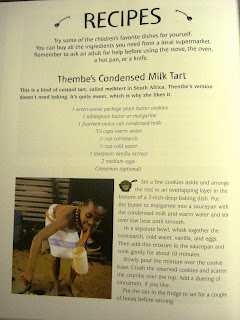
4. Something from your culture. As a final step, the teacher will ask the students to brainstorm ideas to describe food items from which they consider to be “from their culture” and they will produce an outline of a writing/photograph/recipe/story project to be presented on the following class. That class will probably start with a vocabulary activity in which students will have to match the names of the different dishes learnt in this lesson to their corresponding descriptions. Ideas about the cultural globalization of food may be introduced on a subsequent class as well.


Monday, February 22, 2010

Object Box: Illinois


Object Box # 1: Arrowhead carvings

NCSS Thematic Strand: Culture and Cultural Diversity

IL Social Science Standard: 16.C.1a (W) Identify how people and groups in the past made economic choices (e.g., crops to plant, products to make, products to trade) to survive and improve their lives.

Activity: First, as a class we will inspect the differences in the arrowheads on the poster and determine which ones the Indians used for what purposes. Then, after the children have discussed the arrowheads and the differences among them, each student will get a bar of soap and a plastic knife. They will choose one of the arrowheads to carve. From this activity they will see the difficulty and precision involved in this practice.

Resources: Morris Library: CMC Poster Collection, Social Studies, # 102.ed

Object Box # 2: History of Illinois

NCSS Thematic Strand: People, Places, and Environment

IL Social Science Standard: 16.B.1a (US) Identify key individuals and events in the development of the local commu­nity

Activity: After reviewing historical facts of Illinois, the students will play histo-bingo. Each student will be given a game card and markers. I have a list of questions or facts to which the answers are on their bingo cards. An example of the question/fact and answer is: I would say, December 3, 1818 and the corresponding game piece would be, statehood date. The same rules apply as are applied in regular bingo.

Resources: Morris Library: IMC, 3-D, Game 307.


Object Box #3: Geography of Illinois

NCSS Thematic Strand: People, Places, and Environments

IL Social Science Standard: 17.A.1a Identify physical characteristics of places, both local and global (e.g., locations, roads, regions, bodies of water).

Activity: After learning many facts about the geography of Illinois such as: the border states, highest point, rank in area, rivers, and area. Each student will be given a Geo-Bingo card. The teacher will read a fact about the geography of Illinois and the students will place their bingo marker over the corresponding answer spot on their card. For example the teacher would read 57, 918 feet and the student would place their marker of the box labeled highest point. The students can be given instructions about what type of bingo applies to each game played; diagonal, across, or four corners.

Resources: Morris Library: IMC, 3-D, Game 306, http://www.merriam-webster.com/cgi-bin/nytmaps.pl?illinois


Object Box #4: Illinois Geography Facts

NCSS Thematic Strand: People, Places, and Environments

IL Social Science Standard: 17.A.1a Identify physical characteristics of places, both local and global (e.g., locations, roads, regions, bodies of water).

Activity: To learn the basic facts about the geography of Illinois; highest point, border states, area and rivers, student in groups of 2-4 will use the Illinois state website http://www.illinois.gov/facts/ and collect as much information as they can find. Once students have found five facts about Illinois the class will discuss and share the facts each group found. (Specific facts to be found can be given by the teacher, but there should be an option to find and interesting fact or one the students think is “cool” to share so not every group has all of the same facts during discussion.)

Resources: http://www.illinois.gov/facts/


Object Box #5: Illinois State Symbols

NCSS Thematic Strand: People, Places, and Environment

IL Social Science Standard: 16.B.1a (US) Identify key individuals and events in the development of the local commu­nity

Activity: To introduce the unit about Illinois the students will learn about the state symbols. In pairs students can choose or be assigned a state symbol to research. Each pair will need to investigate their symbol using the websites given. After researching their information students can draw or print a picture of the symbol. After their research is finished the pairs can use their best handwriting and pictures to make a poster about their symbol to display in their classroom and present to their peers.

Resources: http://www.museum.state.il.us/exhibits/symbols/

Object Box: Italy


Object box 1: Monuments
NCSS Thematic Strand: People, Places, and Environments
IL History Standard:

STATE GOAL 16: Understand events, trends, individuals and movements shaping the history of Illinois, the United States and other nations.

16.B.1a (US) Identify key individuals and events in the development of the local commu­nity (e.g., Founders days, names of parks, streets, public buildings).

Activity- After reading and discussing the book, The Roman Colosseum, by Elizabeth Mann, the children will get into groups and each work together to build the Colosseum using the block system.

Content of box: Colosseum block system and the book.

Resources: Morris Library- imc 3d soci 410, http://www.italyguides.it/us/roma/rome_italy_travel.htm


Object box 2: Language

NCSS Thematic Strand: Culture

IL Social Systems Standard:

STATE GOAL 18: Understand social systems, with an emphasis on the United States.

A. Compare characteristics of culture as reflected in language, literature, the arts, traditions and institutions.

Activity: The class will discover the Italian Language by using the vocabulary cards shown in the picture above and by visiting the babelfish website. After practicing the language each student will choose a word they feel is important to put in the classroom book of Italian and English words. Each student has a page to put the Italian word, that word in English, and can draw a picture describing that word.

Content of box: Italian Vocabulary Set, website, and classroom made book.

Resources: Morris Library- imc 3d fore 101

http://babelfish.yahoo.com/translate_txt translation website for language object box


Object box 3: Italian Food

NCSS Thematic Strand: Culture

IL Social Systems Standard:

STATE GOAL 18: Understand social systems, with an emphasis on the United States.

A. Compare characteristics of culture as reflected in language, literature, the arts, traditions and institutions.

18.A.1 Identify folklore from different cultures which became part of the heritage of the United States.

Activity: For this activity, we will lay out the food manipulatives and discuss why these foods are important in Italy. We will then read the book Strega Nona and talk about the pasta pot in the story. To experience the types of Italian food the class will make a pasta pot full of spaghetti at the end of our lesson.

Content of box: Italian Food Set and Strega Nona

Resources: Italian Food Set- imc 3d soci 375, Strega Nona by Tomie dePaola, and materials for classroom spaghetti


Object box 4: Geography

NCSS Thematic Strand: People, Places, and Environments

IL Geography Standard:

STATE GOAL 17: Understand world geography and the effects of geography on society, with an emphasis on the United States.

A. Locate, describe and explain places, regions and features on the Earth.

17.A.1a Identify physical characteristics of places, both local and global (e.g., locations, roads, regions, bodies of water).

17.A.1b Identify the characteristics and pur­poses of geographic representations including maps, globes, graphs, photographs, software, digital images and be able to locate specific places using each.

Activity: After looking at maps of Italy, the students will create a large picture of Italy. They will each get a section of Italy to color, label important features and cities, and then will place the sections together for a classroom map of Italy.

Content of box: Websites, map of Italy, and classroom made map

Resources: www.googlemap.com , http://wwp.greenwichmeantime.com/time-zone/europe/european-union/italy/rome/index.htm this includes regions and time zones throughout Italy.


Object box 5: Currency

NCSS Thematic Strand: Culture and Global Connections

IL Social Systems Standards:

STATE GOAL 18: Understand social systems, with an emphasis on the United States.

C. Understand how social systems form and develop over time.

18.C.1 Describe how individuals interacted within groups to make choices regarding food, clothing and shelter.

Activity: The students will use the website given to learn the value of European money. As a class, we will compare and contrast Euros with US dollars.

Content of box: Website: http://www.euro.ie/sch_quiz/primary/student.htm

Resources: The following website is a great resource for teachers to get worksheets and quizzes to see what the students have learned and what they still need to work on. http://www.mathworksheetwizard.com/thirdgrade-math.html